Some jobs run hot. Standard HVAC systems can’t keep up with heavy manufacturing, large construction sites, or high-capacity industrial processes. You need a bigger solution.
Air-cooled chillers handle cooling loads that regular systems can’t. Industrial facilities, data centers, and large-scale outdoor events all rely on them. They deliver precise, reliable cooling where HVAC falls short.
In this guide, you’ll learn how air-cooled chillers work and what their core components do. Explore which type fits your application, and how Texas First Rentals can get one on-site fast.
How Does an Air Cooled Chiller Work?
An air-cooled chiller is a refrigeration system that removes heat from a process or space and rejects it into the surrounding air. No cooling water or external water supply is required.
Understanding how air-cooled chillers work starts with the refrigeration cycle. It runs in four stages, each one hands off to the next.
Stage 1: Evaporation
The refrigeration cycle begins at the evaporator. Here, the liquid refrigerant absorbs heat from the chilled water or process fluid as it passes through the heat exchanger. As it absorbs that heat, the refrigerant changes from liquid to gas. The cooled water then flows out to handle your cooling loads.
Step 2: Compression
The low-pressure refrigerant gas moves into the compressor. Pressure builds, and the refrigerant’s temperature rises sharply. This high-pressure, high-temperature gas is now ready to release the heat it’s been carrying.
Step 3: Condensation
The hot refrigerant flows into the chiller condenser. Fans push ambient air across the condenser coils, pulling heat away from the refrigerant gas. That excess heat gets rejected directly into the surrounding air. This is the key difference from water-cooled systems. There’s no condenser water loop, no cooling tower, no extra infrastructure.
Stage 4: Expansion
The refrigerant, now cooled back to liquid, passes through the expansion valve. Pressure drops. Temperature drops. The liquid refrigerant returns to low pressure and flows back to the evaporator to restart the cycle.
This is the working principle behind every air-cooled chiller system. The refrigerant flows in a continuous loop, moving heat from where you don’t want it to the outside air. It’s how this chiller air conditioning system delivers consistent, efficient cooling without drawing on local water resources.
Core Air Cooled Chiller Components and Their Functions
Every air-cooled chiller system consists of several key components that work together to remove heat from your facility or process. Knowing what each part does and what to watch for when something goes wrong helps you stay ahead of downtime.
Compressor
The compressor is the engine of the refrigeration system. It takes low-pressure refrigerant gas from the evaporator and compresses it into a high-pressure, high-temperature gas. This pressurized refrigerant drives heat transfer throughout the rest of the system. Many industrial chillers use reciprocating or scroll compressors, depending on the required cooling capacity.
Watch for: Unusual noise, vibration, or a drop in cooling performance. These are early signs that the compressor is under stress or losing efficiency.
Condenser Coils
The condenser coils are where heat rejection happens. Hot refrigerant gas flows through the coils, and fans push ambient air across them to remove excess heat. This is the defining feature of air-cooled chiller systems. Heat leaves through the air, not through a cooling tower or condenser water loop.
Watch for: Bent fins, debris buildup, or restricted airflow around the coils. Any of these reduces chiller efficiency and drives up energy costs.
Evaporator
The evaporator is the heat exchanger where cooling actually occurs. Warm process water or chilled water passes through, and liquid refrigerant on the other side absorbs that heat. The refrigerant evaporates, the water cools, and that cooled water heads out to handle your cooling loads.
Watch for: Frost buildup on the evaporator surface or a rise in chilled water temperature. Both point to a heat transfer problem that will hurt cooling performance if left unchecked.
Expansion Valve
The expansion valve controls how much liquid refrigerant enters the evaporator. It reduces the refrigerant’s pressure and temperature before it reaches the heat exchanger, setting up the next stage of the refrigeration cycle.
Watch for: Inconsistent chilled water temperatures or short-cycling of the compressor. These can indicate the valve is stuck open, stuck closed, or losing its ability to regulate refrigerant flow accurately.
Refrigerant
Refrigerant is the coolant that carries heat through the entire system. It shifts between liquid and gas states as it moves through the cooling process, absorbing heat at the evaporator and releasing it at the chiller condenser. The type of chiller used affects both energy efficiency and the system’s long-term lifespan.
Watch for: A gradual loss of cooling capacity without another obvious cause. Refrigerant charge loss is a common culprit and one of the more overlooked air-cooled chiller component issues in industrial settings.
Fans and Blowers
Fans and blowers push air from the surrounding area across the condenser coils to carry heat away from the refrigerant gas. Without strong, consistent airflow, the heat rejection process slows down, and the entire cooling system works harder to compensate.
Watch for: Reduced airflow, loud bearing noise, or fan blades with visible damage. Poor airflow raises operating temperatures across the system, increases energy costs, and shortens the lifespan of other components.
Types of Air Cooled Chillers Used in Industry
Not every air-cooled chiller system is built the same way. The type you choose depends on your cooling loads, your site, and how fast you need cooling up and running.
Here are the three main configurations used across industrial processes, commercial buildings, and large-scale temporary applications.
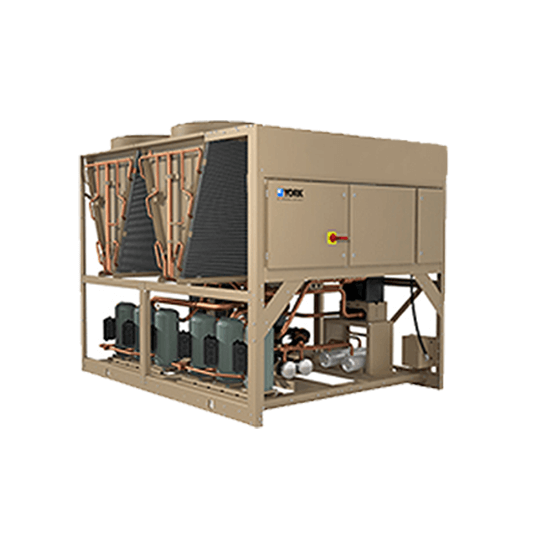
Packaged Chillers
A packaged chiller combines everything into a single unit. The compressor, condenser coils, evaporator, and controls are all housed together. You set it up, connect it to your system, and it runs.
These units suit facilities with steady, high cooling capacity demands. Manufacturing plants, data centers, and large commercial buildings use them for long-term, reliable cooling. They deliver strong chiller efficiency and low maintenance costs over time when properly maintained.
Modular Chillers
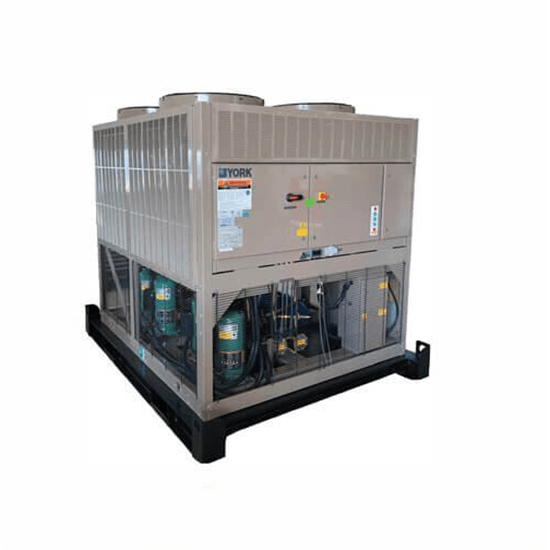
Modular chillers give you flexibility. Each module carries a set cooling capacity, and you stack them to match your load. Add a module when demand grows. Remove one when it drops.
This makes them a strong fit for industrial processes with variable cooling needs. They also reduce downtime risk. If one module needs service, the others keep running. Your cooling performance stays intact.
Portable and Rental Chillers
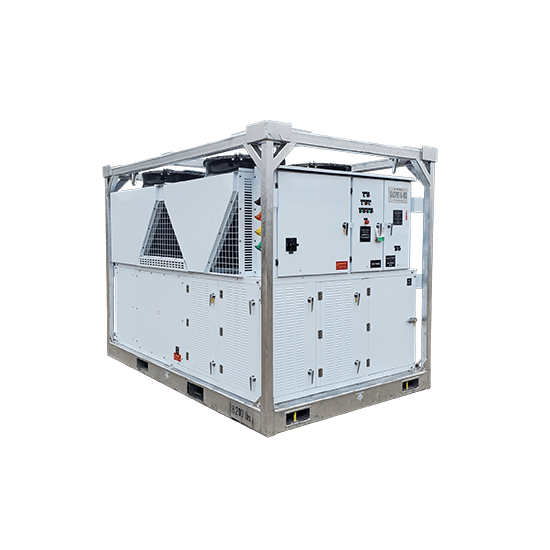
Portable chillers are trailer- or skid-mounted and designed for fast deployment. They deliver industrial chiller capacity without the lead time or capital cost of a permanent installation.
These units cover a lot of ground. They handle emergency cooling when the primary system fails. They fill in during planned maintenance windows. They support temporary industrial processes, construction sites, and outdoor events where no fixed cooling infrastructure exists.
For operations that face seasonal spikes in cooling loads or unexpected downtime, portable chillers keep things moving. Deployment is fast, and setup is straightforward.
Common Applications for Air Cooled Chillers in Industry
Air-cooled chillers show up across a wide range of industries because heat is a universal problem. If a process, facility, or event generates more heat than standard HVAC systems can handle, a chiller is usually the answer.
Manufacturing and Process Cooling
Manufacturing lines generate heat continuously. Machinery, hydraulics, and industrial processes all raise temperatures. Air-cooled chillers keep equipment running at safe operating temperatures. In facilities that also use compressed air systems, an air compressor chiller removes the heat generated by compressor operations. Visit HOLT’s compressed air page if your site has both cooling and compressed air needs.
Construction Sites and Temporary Facilities
Construction sites rarely have permanent cooling infrastructure. Portable air-cooled chillers fill that gap. They cool temporary offices, protect sensitive equipment, and support large-scale concrete curing processes where temperature control directly affects structural outcomes.
Data Centers and Server Room Cooling
Data centers run hot around the clock. Servers generate constant heat loads, and even short spikes in temperature cause damage or downtime. Air-cooled chiller systems provide the precise, reliable liquid cooling that data centers depend on to protect equipment and maintain uptime.
Outdoor Events and Large Venue Cooling
Large outdoor events and temporary venues need cooling solutions that set up fast and perform under pressure. Air-cooled chillers connect to air handling units and air handlers to cool tents, pavilions, and large event spaces without relying on fixed building infrastructure.
Emergency Cooling and Planned Maintenance
When an HVAC system fails or goes offline for maintenance, operations can’t just stop. A rental air-cooled chiller from HOLT steps in immediately. It bridges the gap between failure and repair, or covers the full window of a planned shutdown, without disrupting industrial processes or compromising facility conditions.
For any of these applications, HOLT’s temperature control page is the right starting point.
Keep your Space Cool with Texas First Rentals
When your cooling loads exceed your current system’s capacity, an air-cooled chiller rental closes that gap fast.
Texas First Rentals delivers, installs, and supports every unit on-site. You don’t coordinate logistics or figure out setup on your own. HOLT’s team handles it.
If you’re managing a planned maintenance window, an emergency shutdown, or a temporary industrial process, the right chiller is available when you need it.
Visit the temperature control page to explore available units. Or skip straight to scheduling a site assessment.
If you’re not sure which chiller size fits your load, call 844-660-RENT (7368). We’ll help you size it right before the unit ever leaves the yard.