Power outages don’t send a warning. One minute, your operation is running. The next, it’s not.
Choosing the right generator type isn’t a small decision. The wrong call can undersize your power supply, stall your job site, or leave your facility dark when it matters most.
You have options such as diesel generators, natural gas, propane, solar, inverter generators, and more. Each one fits a different need, a different fuel source, a different job.
In this guide, you’ll learn the different types of generators, how each one works, and how to match the right power source to your application.
What Types of Generators Are There?
Generators convert mechanical energy into electrical energy. The type you pick depends on your fuel source, your power output needs, and how long you need it to run. Here’s a breakdown of each type.
Diesel Generators
Diesel generators are the workhorses of industrial power generation. You’ll find them on construction sites, in hospitals, at data centers, and anywhere that needs heavy-duty, continuous electric power.
They run on diesel fuel. Which is widely available and stores well. That makes them reliable for long running times. Some industrial diesel generators can run 24 to 48 hours on a single tank before refueling.
- Power Output: 20 kw to 2,500 kw and beyond
- Best for: Construction sites, manufacturing facilities, large-scale industrial operations, emergency backup power.
Diesel generators are also fuel-efficient at high loads. The harder you push them, the better they perform. That’s why they’re the default choice for industrial generators and critical facilities.
One thing to plan for: emissions. Diesel units produce exhaust, so they need proper ventilation and must meet local emissions standards.
HOLT Industrial Rentals carries a range of diesel generator rentals built for exactly this kind of demand, heavy loads, long runtimes, and tough job site conditions.
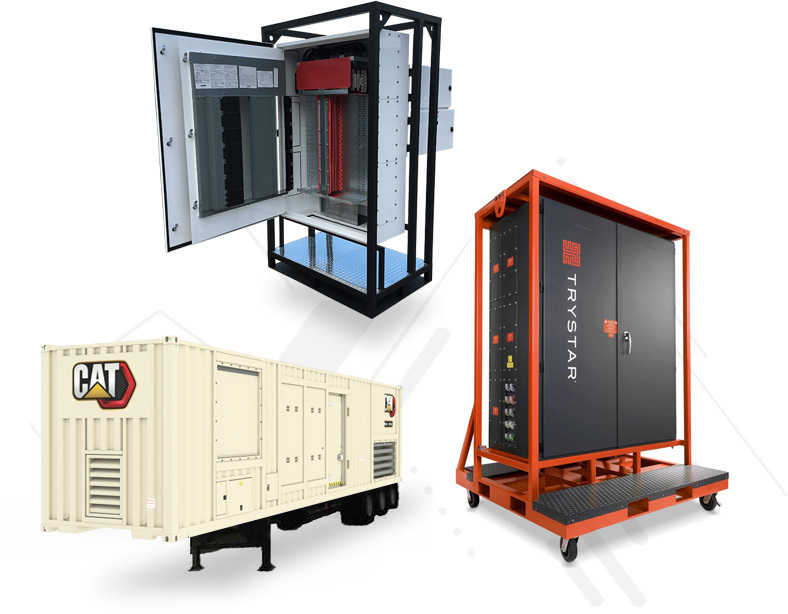
An example of commercial and industrial generator rentals by HOLT Industrial Rentals
Natural Gas Generators
Natural gas generators connect directly to a gas line. You get a steady power supply as long as the line stays active.
They produce fewer emissions than diesel generators, which makes them a cleaner option for facilities with strict environmental standards.
- Power output: 10 kW to 2,000 kW
- Best for: Facilities with existing gas infrastructure, commercial buildings, hospitals, standby power systems
Natural gas generators work well as permanent or semi-permanent backup power solutions. The fuel cost is also lower than diesel in most regions, making them a cost-effective long-term option.
The trade-off is fuel access. If a natural gas line goes down during a widespread power outage, your generator goes down with it.
Propane Generators
Propane sits in a tank on your site. Unlike natural gas, it doesn’t rely on a gas line. That gives you more control over your fuel source, especially in remote locations.
Propane burns cleaner than diesel and has a long shelf life in storage, up to 30 years. That makes it a practical choice for backup generators that sit idle for months at a time.
- Power output: 5 kW to 150 kW
- Best for: Remote sites, rural facilities, light commercial backup power
Propane generators are popular for standby use. They start automatically when the power goes out and connect to your electrical panel through an automatic transfer switch. Runtime depends on tank size, but a 500-gallon tank can keep a mid-size unit running for several days.
Solar Generators
Solar generators use solar power to change a battery bank. The stored electrical energy powers your equipment through an inverter, converting direct current into alternating current.
They produce zero emissions and run silently. For remote monitoring stations, small job site offices, or temporary lighting setups, they’re a clean and practical option.
- Power output: 1 kW to 15 kW (most portable units)
- Best for: Remote locations, low-load applications, renewable energy setups, off-grid sites
Solar generators have limits. They depend on sunlight to recharge, so cloudy days or high-demand jobs can drain them fast. They’re best suited for light power needs, laptops, lighting, small equipment; not heavy industrial loads.
For large-scale or critical power generation, solar alone usually isn’t enough. Think of it as a supplement, not a primary power source.
Bi-Fuel Generators
Bi-fuel generators run on two fuel sources at once, typically diesel and natural gas. The diesel engine starts the unit and carries the base load. Natural gas feeds in to reduce diesel consumption as the load increases.
This gives you the reliability of diesel with the cost savings and lower emissions of natural gas.
- Power output: 100 kW to 2,000 kW
- Best for: Long-term industrial operations, facilities with access to both fuel types, applications where fuel cost and runtime matter
Bi-fuel systems are gaining ground in industrial settings where runtime is long and fuel efficiency matters. They can cut diesel consumption by up to 70% under the right conditions.
Inverter Generators
Inverter generators produce alternating current, convert it to direct current, then invert it back to clean alternating current. That process produces stable, consistent power with low harmonic distortion.
The clean power output matters for sensitive equipment such as laptops, medical devices, and electronics that don’t tolerate power fluctuations.
- Power output: 1 kW to 7 kW
- Best for: Small job sites, outdoor events, light commercial use, sensitive electronics
Inverter generators are quieter and more fuel-efficient than conventional portable generators. They adjust engine speed to match the load, which saves fuel and reduces noise.
They’re not built for heavy industrial loads. If your operation needs serious wattage, look at diesel or natural gas options.
Portable Generators
Portable generators are small, gas-powered units you can move from site to site. They plug in directly; no permanent connection to an electrical system required.
They’re common for construction sites with light power needs, small outdoor events, and as temporary backup power.
- Power output: 1 kW to 17 kW
- Best for: Light construction, job site tools, small events, residential backup power
Most portable generators run on gasoline. Runtime is typically 8 to 12 hours on a full tank. One important safety note: they produce carbon monoxide and must always run outdoors or in well-ventilated spaces. Never run one indoors or near open windows.
Standby Generators
Standby generators stay connected to your electrical system at all times. When the grid goes down, an automatic transfer switch triggers the unit and it starts within seconds.
They run on natural gas or propane and are designed for long automatic operation, no manual startup, no extension cords, no delay.
- Power output: 7 kW to 150 kW for commercial units; larger industrial standby systems go well beyond that
- Best for: Hospitals, data centers, commercial facilities, any operation where downtime is not an option
A properly installed standby generator keeps your operation running through blackouts without anyone lifting a finger. An electrician handles the installation and connects the unit to your electrical panel.
Industrial Generators
Industrial generators sit at the top of the scale. These are heavy-duty units built for continuous, high-load operation across large facilities, power plants, mining operations, and major construction projects.
They handle loads that smaller generators simply can’t. And they’re built to run for extended periods without a break.
- Power output: 50 kW to 3,500 kW and above
- Best for: Manufacturing plants, mining sites, refineries, large construction projects, critical infrastructure
Rental fleet includes industrial diesel generators sized for the most demanding applications, delivered, installed, and supported by an experienced team.
How to Choose the Right Generator Size
Picking a generator type is only half the decision. The other half is getting the size right.
Too small and your equipment strains or shuts down. Too large and you’re burning fuel and money on power you’re not using. Here’s how to find the right fit.
Start With Your Power Needs
Before you look at any generator spec sheet, figure out what you’re actually powering. Make a list of every piece of equipment that will draw power from the generator.
For each item, find the wattage. Most equipment has a label on the back or side that lists running watts and starting watts. Starting watts are higher, motors and air conditioning units pull a surge of power when they first kick on.
Add up all the running watts. Then add the highest single starting watt figure to that total. That number is your minimum power output requirement.
A licensed electrician can help you do this calculation accurately for large facilities. For complex industrial setups, it’s worth getting a professional assessment before you rent or buy anything.
Understand the Cost of Getting It Wrong
Undersizing is the more common mistake. A generator running at or above its rated capacity runs hot, wears out faster, and can trip or shut down at the worst possible moment.
Your electrical system suffers too. Voltage fluctuations from an undersized unit can damage sensitive equipment over time.
Oversizing has its own problems. Diesel generators, in particular, run poorly at low loads. Running a large diesel unit at under 30% capacity causes a condition called wet stacking. This is the incomplete combustion that damages the engine and shortens its lifespan.
The goal is to run your generator at 70% to 80% of its rated capacity. That’s the sweet spot for efficiency, performance, and long-term reliability.
Account for Running Time
Size and runtime are connected. A generator sized correctly for your load will run longer and more efficiently than one that’s constantly pushed to its limit.
Think about how long you need continuous power. A short-term job site need is different from a facility running backup power through an extended blackout.
For longer running times, factor in fuel storage and refueling logistics. A unit that’s right on your load limit will burn through fuel faster and need more frequent attention.
Consider Renting
Buying a generator means committing to one size. If your power needs grow or change, you’re stuck with what you bought.
Renting gives you flexibility. You can right-size the unit for each specific job or situation. If your load increases, you scale up. If the job wraps early, you send it back. There’s no capital commitment, depreciation, or maintenance costs sitting on your books.
For industrial operations, this matters. A planned maintenance shutdown has different power needs than an emergency outage response. Renting lets you match the generator to the moment, not the other way around.
HOLT Industrial Rentals carries a wide range of generator sizes for exactly this reason. Our team can assess your site and match you to the right unit before delivery. If your power needs shift mid-project, the rental can be adjusted.
For a deeper look at sizing options, see the Portable Generator Sizes guide for a full breakdown by application and load range.
FAQs
Do you need a transfer switch?
Yes. A transfer switch connects your generator to your electrical panel and switches your power supply automatically when the grid goes down. An electrician will require one for any permanent setup.
Can you run a generator indoors?
No. Gas-powered generators produce carbon monoxide. Always run them outdoors and away from windows and vents.
How long do industrial generators last?
A well-maintained diesel generator can run 20,000 to 30,000 hours. Lifespan depends on load management, fuel quality, and regular servicing.
Can generators power air conditioning?
Yes, but AC units draw a lot of power at startup. Always factor in that surge when calculating your load before sizing your unit.
Explore Our Range of All Generators Rental Types Today
You now know the different types of generators, how each one works, and how to size one for your power needs. The next step is finding the right unit for your specific job.
HOLT carries a full range of industrial generator rentals, including diesel, natural gas, and beyond. Every unit is delivered, installed, and supported by an experienced team that knows industrial power generation inside and out. If your load changes mid-project, the rental scales with you.
Your facility can’t afford downtime. You can get reliable electric power when and where your operation needs it.
Call 844-660-RENT (7368) to speak with a project manager today. We’ll assess your site, calculate your power needs, and match you to the right generator before a power outage forces your hand.
Or schedule a site assessment online and get a contingency plan in place.