Picking the right portable generator size isn’t complicated. But get it wrong, and you’ll pay for it in tripped breakers, damaged equipment, or wasted fuel. The size you need depends on your power requirements.
In this guide, you’ll learn how to calculate your total power needs, understand the difference between running and starting watts, and match your power demands to the right portable generator size.
Why Choosing the Right Portable Generator Size Matters
Generator size affects everything: safety, reliability, and how long your equipment lasts. Getting it wrong has real consequences.
Here’s what happens at both ends of the spectrum.
When You Undersize a Generator
An undersized generator struggles from the start. It can’t meet your total power demands, so it runs at or above its limit constantly.
That stress shows up fast. Voltage drops and breakers trip. Equipment that draws power inconsistently, such as air conditioners, compressors, sump pumps, etc, can overheat or burn out motors entirely.
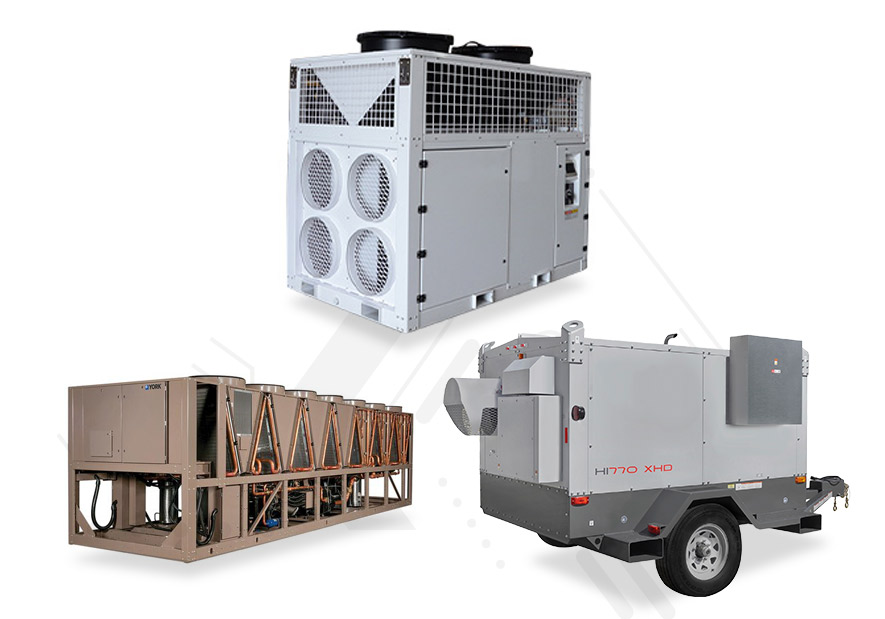
On a construction site, an undersized portable generator means tools cut out mid-job. On a job site running an HVAC system, it means the air conditioning never quite keeps up, and the generator runs hot trying.
The harder you push an undersized unit, the shorter its lifespan. It’s not built to sustain that kind of load.
When You Oversize a Generator
Oversizing feels like the safe choice. It isn’t.
A generator set running well below its rated capacity runs inefficiently. For diesel generators, low load operation causes wet stacking (unburned fuel builds up in the exhaust system and creates long-term engine damage.)
Oversized units also burn more fuel than the job requires. On a long-term construction site or during an extended power outage, that adds up fast. Your utility bills and fuel costs climb while your generator underperforms.
The Safety Risks of Getting It Wrong
An overloaded generator is a safety risk. Push a portable generator past its rated output and you risk overheating, electrical faults, and in serious cases—fire.
An improperly sized backup generator connected to your electrical system without the right transfer switch creates back-feed risk. That’s dangerous for utility workers and your own equipment.
Real Applications Where Size Gets Missed
A portable power setup for a small job site office looks simple. Add a space heater, a few device chargers, a laptop, and a coffee maker, and you’re already pulling more running wattage than most people expect.
Scale that up to a construction site running a compressor, power tools, and temporary lighting simultaneously, and the margin for error shrinks fast.
A standby generator sizing carries its own risk. An undersized unit can’t power an electric water heater, air conditioning, and basic lighting at the same time. During a power outage, that’s a problem you don’t want to discover after the fact.
How to Calculate Generator Wattage Requirements
The math behind generator sizing is straightforward. You just need to know what you’re powering and how much power each item draws.
Follow these steps, and you’ll have your total wattage figure in minutes.
Step 1: List Every Item You Need to Power
Start with a full list. Write down every piece of equipment that will draw power from the generator at the same time.
Don’t guess. Check each item’s label or manual for its power requirements. If something is missing from the label, the manufacturer’s website will have it.
Step 2: Find the Running Watts for Each Item
Running watts are the power an item draws during regular operation. This is your baseline figure for each piece of equipment.
Most appliances and tools list running watts directly on their label. If yours lists amps instead, use this formula:
Watts = Volts x Amps
In the US, standard equipment voltage is 120V or 240V. Multiply your total amps by the voltage, and you have your running power.
Step 3: Identify Starting Watts for Motor-Driven Equipment
Some equipment needs a surge of power to start up. Air conditioners, compressors, sump pumps, and HVAC systems all draw significantly more power at startup than during normal operation.
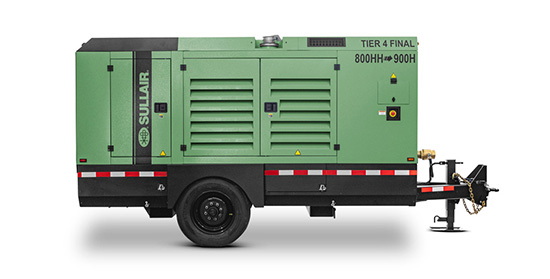
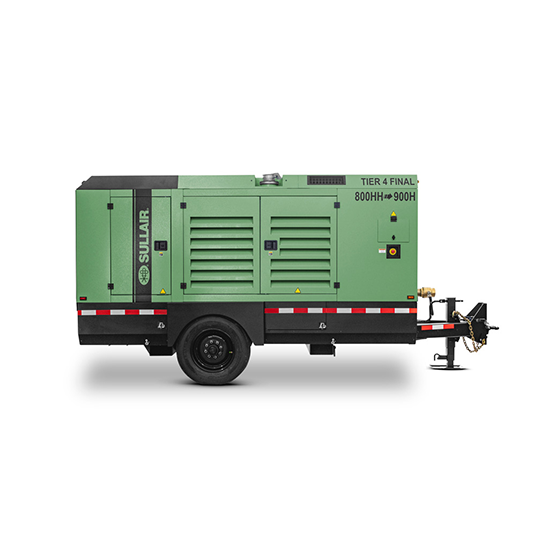
This startup draw is called starting watts. It only lasts a few seconds, but your generator has to handle it.
Starting watts are typically two to three times the running wattage for motor-driven equipment. Check the label or spec sheet for the exact figure.
If your air conditioner runs at 1,500 watts but requires 4,500 watts to start up, your generator needs to handle that 4,500-watt surge even if it only lasts a moment.
Step 4: Add It All Up
Now put the numbers together.
Add the running watts for every item on your list. That gives you your total running wattage.
Then take the single highest starting watt figure from your list, usually your largest motor-driven item, and add it to your total running wattage.
Total Power Requirement = Total Running Watts + Highest Single Starting Watts
That final figure is your minimum power requirement. Your portable generator needs to meet or exceed it.
Step 5: Convert to Kilowatts or KVA if Needed
Generator output is often listed in kilowatts or KVA rather than watts.
The conversion is simple:
Kilowatts = Watts ÷ 1,000
So a total power requirement of 8,500 watts equals 8.5 kilowatts.
KVA figures account for power factor, the efficiency at which your electrical system uses power. For most portable generator sizing, kilowatts is the more practical unit to work with.
Use a Generator Wattage Calculator
If you’d rather skip the manual math, a generator wattage calculator can do the work for you. Enter your equipment list, and the tool automatically estimates your total power needs.
It’s a helpful starting point, especially for complex job sites or facilities with extensive equipment lists. Use it to get a ballpark figure, then verify with the step-by-step method above.
So, How Big of a Generator Do You Need?
You’ve done the math. Now let’s apply it.
Generator size needs vary by application. A backup setup has different power demands than a commercial job site. Here’s how to match your total wattage figure to the right size generator for your situation.
Portable Generators for Small Remote Sites
A power outage at any site is inconvenient. A long one is a real problem, especially if you rely on medical equipment, or have busy security stations, or are located in an area with extreme temperatures.
For basic site backup, such as lights, a freezer, device chargers, and a few small lab appliances and terminals, a 3,000 to 5,000-watt portable generator covers most needs.
If you want to run central air conditioning, an electric water heater, and multiple appliances simultaneously, plan for a minimum of 7,500 to 10,000 watts.
Whole-site generators that power everything in a small site typically start at 10,000 watts and go up from there. For small facility coverage, a standby generator connected through a transfer switch is usually the better long-term power solution.
| Application | Recommended Size |
| Basic essentials only | 3,000 – 5,000W |
| Partial backup | 5,000 – 7,500W |
| Full lighting and climate control | 7,500 – 10,000W |
| Whole-house generator | 10,000+ |
Portable Generators for Medium-to-Large Job Sites
Construction sites have different demands depending on what’s running. A small site with basic power tools needs far less than a large site running compressors, HVAC, and heavy equipment simultaneously.
For light job site use such as power tools, lighting, and small equipment, a 4,000 to 8,000-watt portable generator handles the load.
Mid-size construction sites running a compressor, multiple tools, and temporary lighting need 8,000 to 15,000 watts of reliable power generation.
Larger sites with multiple power demands running simultaneously should consider commercial generator options starting at 15,000 watts or more.
| Job Site Application | Recommended Size |
| Light tools and lighting | 4,000 – 8,000W |
| Mid-size site with compressor | 8,000 – 15,000W |
| Large multi-demand site | 15,000+ |
Portable Generators for Commercial Use
Commercial applications vary widely. A small retail backup setup is a different beast from a large facility running HVAC, refrigeration, and complete electrical systems during an outage.
For small commercial backup power, e.g, office equipment, lighting, and basic systems, plan for 10,000 to 20,000 watts.
Mid-size commercial facilities running air conditioning, refrigeration, and multiple electrical systems need 20,000 to 50,000 watts of emergency power.
Larger commercial operations should consult with a power generation specialist before sizing. The variables, total amps, electrical system layout, and simultaneous load demands, get complex fast.
| Commercial Application | Recommended Size |
| Small office or retail backup | 10,000 – 20,000W |
| Mid-size commercial facility | 20,000 – 50,000W |
| Large commercial operation | 50,000W+ |
Portable Generator Sizes vs. Industrial Generator Rentals: When to Scale Up
Portable generators are practical. They’re mobile, easy to set up, and handle a wide range of power needs. But they have limits.
Here’s how to know when you’ve hit them.
When Portable Generator Sizes Aren’t Enough
Portable generators have a ceiling. For most units, that ceiling sits around 17,000 watts, or 17 kilowatts.
If your total power requirement exceeds that, you’ve moved past portable generator territory. Industrial generator sets, standby generators, and diesel generators pick up where portable power leaves off.
For industrial construction sites, manufacturing facilities, data centers, and critical infrastructure, power demands routinely run into hundreds of kilowatts. That’s a different category of equipment entirely.
Texas First Rentals specializes in exactly that range. If the power you need exceeds what a portable generator can deliver, our team can size and deliver an industrial generator rental tailored to your specific load requirements.
When to Consider an Industrial Generator Rental
A few clear signs tell you it’s time to scale up:
- Your site runs motor-driven equipment with high starting watts simultaneously
- You need continuous emergency power for days, not hours
- Your electrical system requires a dedicated transfer switch and professional installation
- Your application falls under the national electrical code requirements for commercial or industrial power
- Your total wattage calculation exceeds 15,000 to 17,000 watts
<h3> Renting Makes the Transition Easy
Buying an industrial generator set is a large capital commitment. Renting gives you the right size generator for the job without that investment.
You get the power supply you need, sized correctly, delivered on-site, and returned when the job is done.
Can I run a whole small building on a portable generator?
Yes, but you’ll need 10,000 watts or more to cover essential systems simultaneously. For full whole-house coverage, a standby generator with a transfer switch is the better long-term solution.
What’s the difference between KW and KVA?
Kilowatts measure actual power output. KVA accounts for how efficiently your electrical system uses that power. For portable generator sizing, focus on kilowatts.
Is a portable generator or standby generator better for backup power?
Portable generators are flexible and cost less up front. Standby generators start automatically during a power outage and are better suited to critical applications. Your power needs and outage frequency determine the right choice.
How long can a portable generator run continuously?
Runtime depends on fuel tank size and the load you’re running. Most generators run 8 to 12 hours on a full tank at 50% load. Push the load higher, and the runtime drops.
For extended power outages that last days, a propane or natural gas generator with a dedicated fuel supply is a more practical backup power solution than a standard portable unit.
Explore Our Range of Portable Generators at Holt Industrial Rentals
Generator sizing doesn’t have to be a guessing game. You have the formula, the reference ranges, and the knowledge to make a confident call.
The next step is getting the right unit in your hands.
Texas First Rentals carries a full range of generator rentals, including portable power solutions and heavy-duty industrial generator sets. Every rental is delivered, installed, and supported by a team that knows power generation inside and out.
Don’t wait for a power outage to find out your generator can’t keep up.
Call 844-660-RENT (7368) to speak with a project manager today. We’ll assess your power requirements and match you to the right generator size.
Or schedule a site assessment online and get your power solution in place today.